
Methodology (3x3)
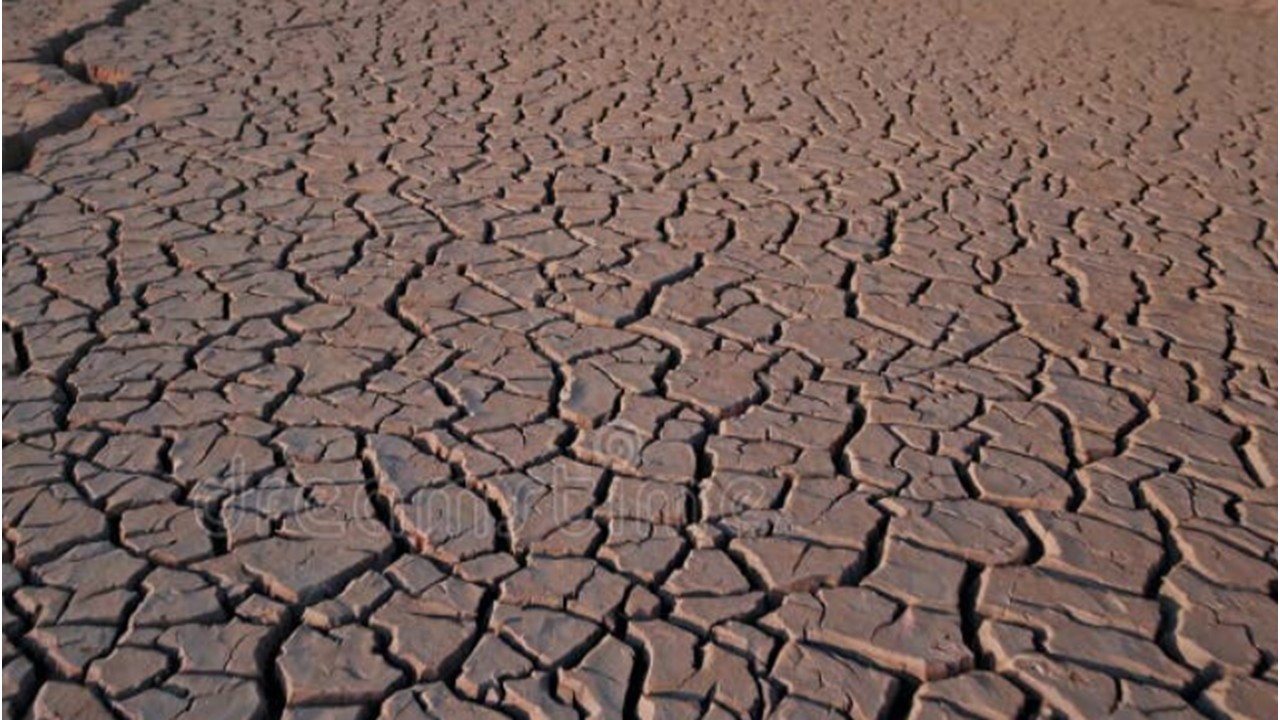
We identify Entities (O), Behaviors (B), and Emergents (e), then evaluate Earth/Mars cues from the physical mechanism.
3x3 analysis (O/B/e)
Entities (O)
- Mudflat plate polygons
- Crack boundaries
- Fine sediment substrate
Behaviors (B)
- Evaporation-driven drying
- Contraction and cracking
- Surface shear and plate uplift
Emergents (e)
- Polygonal crack network
- Plate edge morphology
- Desiccation pattern memory
Why this suggests Earth
- Crack geometry and scale match wet clay drying on Earth
- Plate edges show plastic deformation (soft sediment)
- Terrestrial mudflat texture differs from lithified Martian polygons
Verdict: Earth
Correct identification: Yes
Detailed Analysis
[
  {
    "id": "TO001",
    "matrix_index": 0,
    "name": "Clay-Rich Sediment Surface",
    "description": "Fine-grained mud/clay substrate forming the ground plane",
    "attributes": ["fine particulate", "cohesive when wet", "brittle when dry"],
    "boundary_condition": "continuous surface layer",
    "part_classification": "proper",
    "metastability_measure": 0.70
  },
  {
    "id": "TO002",
    "matrix_index": 1,
    "name": "Desiccation Plates",
    "description": "Polygonal dried mud plates formed by contraction",
    "attributes": ["polygonal", "rigid", "fractured"],
    "boundary_condition": "crack-bounded regions",
    "part_classification": "proper",
    "metastability_measure": 0.55
  },
  {
    "id": "TO003",
    "matrix_index": 2,
    "name": "Surface Fissures",
    "description": "Crack networks separating sediment plates",
    "attributes": ["linear", "networked", "void spaces"],
    "boundary_condition": "fracture boundaries",
    "part_classification": "transitional",
    "metastability_measure": 0.35
  },
  {
    "id": "TO004",
    "matrix_index": 3,
    "name": "Thermal-Evaporation Field",
    "description": "Heat and moisture gradient driving drying",
    "attributes": ["energy field", "invisible", "gradient-driven"],
    "boundary_condition": "environmental field",
    "part_classification": "improper",
    "metastability_measure": 0.10
  },
  {
    "id": "TB001",
    "matrix_index": 4,
    "name": "Evaporation",
    "description": "Loss of water from sediment through heat exposure",
    "attributes": ["continuous", "diffusive", "irreversible"],
    "boundary_condition": "entire surface",
    "frequency_measure": "constant"
  },
  {
    "id": "TB002",
    "matrix_index": 5,
    "name": "Thermal Contraction",
    "description": "Material shrinkage due to moisture loss",
    "attributes": ["stress-inducing", "distributed", "irreversible"],
    "boundary_condition": "sediment layer",
    "frequency_measure": "continuous"
  },
  {
    "id": "TB003",
    "matrix_index": 6,
    "name": "Fracture Propagation",
    "description": "Crack growth through stressed sediment",
    "attributes": ["network-forming", "directional", "entropy-driven"],
    "boundary_condition": "crack network",
    "frequency_measure": "episodic"
  },
  {
    "id": "Te001",
    "matrix_index": 7,
    "name": "Polygonal Crack Pattern",
    "description": "Large-scale geometric crack network structure",
    "attributes": ["self-organized", "polygonal symmetry", "patterned"],
    "boundary_condition": "entire field",
    "emergence_strength": 0.90
  },
  {
    "id": "Te002",
    "matrix_index": 8,
    "name": "Desiccation Texture Field",
    "description": "Emergent surface texture encoding drying history",
    "attributes": ["temporal imprint", "structural memory"],
    "boundary_condition": "surface topology",
    "emergence_strength": 0.85
  },
  {
    "id": "Te003",
    "matrix_index": 9,
    "name": "Stress Distribution Geometry",
    "description": "Emergent stress-field geometry shaping crack layout",
    "attributes": ["force-field mapping", "energy dissipation structure"],
    "boundary_condition": "sediment layer",
    "emergence_strength": 0.82
  }
]
Key Relationships
| ID0 | Description | Relationship | ID1 | Description |
|---|---|---|---|---|
| TO004 | Thermal-Evaporation Field | DRIVES | TB001 | Evaporation |
| TB001 | Evaporation | PRODUCES | TB002 | Thermal Contraction |
| TB002 | Thermal Contraction | PRODUCES | TB003 | Fracture Propagation |
| TB003 | Fracture Propagation | RESULTS_IN | Te001 | Polygonal Crack Pattern |
| TO002 | Desiccation Plates | FACILITATE | Te002 | Desiccation Texture Field |
| TB002 | Thermal Contraction | RESULTS_IN | Te003 | Stress Distribution Geometry |
Insights
- Pure physical emergence
No agency, no adaptation — only material physics.
- Entropy-dominant system
All processes are irreversible: evaporation → contraction → fracture → decay.
- Emergence is geometric
Pattern formation is not designed, but self-organized via stress-field resolution.
- Strong analogy to planetary surfaces
This exact pattern exists on:
- Earth (dry lakebeds, playas, mudflats)
- Mars (ancient lakebeds, dried sedimentary basins)
Interpretation Summary
This image represents a desiccation-driven emergence system where:
- Objects: wet clay → dry plates → cracks
- Behaviors: evaporation → contraction → fracture
- Emergents: polygonal geometry → texture fields → stress mapping
All structure arises from mechanism–entity interactions:
- heat + water → evaporation
- evaporation + clay → contraction
- contraction + cohesion → cracking
- cracking → geometry
This is a textbook physical emergence system under the 3×3 logic model.
This one is much more likely Earth than Mars.
Why Earth (not Mars)
The pattern you’re seeing is classic terrestrial desiccation cracking in clay-rich sediments:
Key indicators
- Crack scale and geometry
- The polygon sizes and crack widths match Earth playa/mudflat scales (centimeters to decimeters).
- Martian desiccation cracks tend to be either:
- much larger, more widely spaced (ancient lithified cracks), or
- much finer and more uniform in rover-scale imagery.
- Surface texture
- The surface has plastic deformation edges and rounded plate margins typical of wet clay drying, not lithified sedimentary rock.
- Mars commonly shows cemented polygonal fractures (mineralized), not soft plate breakup.
- Material cohesion
- The plates look like dried mud, not indurated sedimentary rock.
- On Mars, preserved crack patterns are usually in rock, not soft regolith.
- Optical signature
- Earth clay mudflats reflect light differently than Martian dust-regolith mixtures.
- This has the tonal + microtexture look of terrestrial sediment, not oxidized basaltic dust.
Most Likely Planet: Earth
Where on Earth (best-fit environments)
This is characteristic of a dry lakebed / playa / evaporative basin. The strongest matches are:
Very high probability locations:
- Death Valley Playa (California, USA)
- Badwater Basin
- Racetrack Playa
- Classic polygonal desiccation fields
- Bonneville Salt Flats margins (Utah, USA)
(mud zones around salt crusts)
- Salar de Uyuni margins (Bolivia)
(mud-crack zones around salt flats)
-
Makgadikgadi Pans (Botswana)
-
Lake Eyre Basin (Australia)
Best single guess (if forced to pick one):
➡️ Death Valley playa system (California) This looks extremely consistent with:
- Racetrack Playa style cracking
- Badwater Basin margins
- Mojave/desert basin clay flats
Clean classification
Planet: Earth Environment type: Desiccated playa / dry lakebed Geophysical process:
- water deposition → sediment settling → evaporation → contraction → fracture → polygonal crack emergence
Confidence
- Earth vs Mars: High confidence Earth
- Exact location: Low–medium confidence, but playa/dry lakebed is very strong
Below is a clean, reusable side-by-side classifier for Earth vs Mars desiccation crack systems. This is designed as a diagnostic tool, not a narrative explanation — so you can apply it quickly to new images.
Earth vs Mars Desiccation Crack Classifier
1) Material State
| Feature | Earth | Mars |
|---|---|---|
| Sediment type | Wet clay → drying mud | Lithified sediment / cemented regolith |
| Plastic deformation | Present (rounded plate edges) | Absent |
| Cohesion behavior | Soft → brittle transition | Brittle only |
| Cementation | Rare | Common (sulfates, salts, iron oxides) |
Diagnostic: Plastic edges = Earth Rock fracture = Mars
2) Crack Geometry
| Feature | Earth | Mars |
|---|---|---|
| Polygon size | cm–dm scale | dm–m scale |
| Crack width | mm–cm | cm–tens of cm |
| Network regularity | Irregular polygons | Often more regular |
| Edge morphology | Curved, soft | Sharp, angular |
Diagnostic: Small, soft polygons = Earth Large, sharp polygons = Mars
3) Surface Texture
| Feature | Earth | Mars |
|---|---|---|
| Plate surface | Smooth, clay-like | Rough, granular, rocky |
| Microtexture | Smoothed by moisture | Abrasive dust texture |
| Fracture faces | Matte, soft | Jagged, mineralized |
| Surface reflectance | Variable | Oxidized, uniform tone |
Diagnostic: Clay texture = Earth Rock/dust texture = Mars
4) Formation Physics
| Feature | Earth | Mars |
|---|---|---|
| Driver | Evaporation of liquid water | Ancient drying + lithification |
| Timescale | Days–months | Millions–billions of years |
| Reversibility | Re-wets and reforms | Irreversible |
| Active cycling | Yes | No |
Diagnostic: Active hydrology = Earth Fossilized hydrology = Mars
5) Environmental Context
| Feature | Earth | Mars |
|---|---|---|
| Vegetation | Often nearby | None |
| Salt crusts | Common | Rare surface expression |
| Mixed sediment types | Yes | Mostly basaltic |
| Atmosphere effects | Moisture, wind, rain | Wind only |
Diagnostic: Hydrologic diversity = Earth Aeolian dominance = Mars
Pattern Recognition Heuristics
Earth signature pattern:
soft plates + rounded edges + small polygons + plastic deformation + clay texture
Mars signature pattern:
rock fractures + sharp edges + large polygons + cemented material + dust regolith
Decision Algorithm (Fast Classifier)
IF plates look soft AND edges are rounded AND polygon size is small
→ Earth

IF fractures are in rock AND edges are sharp AND polygons are large
→ Mars

IF surface shows clay texture AND contraction patterns
→ Earth

IF surface shows cemented fractures AND mineralized cracks
→ Mars
Confidence Model
| Evidence Type | Weight |
|---|---|
| Material state | 40% |
| Geometry | 25% |
| Texture | 20% |
| Context | 15% |
Material state dominates classification.
Applied to Your Image
Observed:
- Soft clay plates
- Rounded edges
- Fine-scale polygons
- Plastic drying deformation
- Non-cemented fractures
Classifier result:
Earth (High confidence) Environment: dry lakebed / playa / evaporative basin
Likely Earth Locations (Pattern Match)
High-probability environments:
- Death Valley playas (CA)
- Racetrack Playa (CA)
- Badwater Basin (CA)
- Bonneville mudflats (UT margins)
- Lake Eyre basin (Australia)
- Makgadikgadi pans (Botswana)
- Salar margins (Bolivia/Chile)